World Suicide Prevention day
2026
Mental Health Is Safety
World Suicide Prevention Day takes place on 10 September. It calls for a move from silence and stigma towards openness, understanding and support. For employers, that change cannot be limited to an annual campaign. It must be reflected in how work is designed, how managers respond and how people access help.
This is especially relevant in manufacturing, logistics and other high-pressure sectors, where shift work, fatigue, production demands, isolated roles, contractor turnover and exposure to critical incidents can affect wellbeing. Work is not the sole cause of suicide or mental ill health. However, employers can reduce work-related psychosocial risks and remove barriers that make it harder for a person in distress to speak up.
That is where the EHS professional has a clear role. The task is not to diagnose, counsel or investigate an employee’s personal life. It is to apply prevention thinking: identify harmful work factors, build confident first responses, create reliable escalation pathways and check that the system works across every shift and employment type.
Defining the EHS Professional’s Role
The Health and Safety Authority identifies psychosocial hazards as features of work design or management that can damage psychological wellbeing. High demands, low control, conflict, poor support, role confusion and weak communication are safety-management issues, not personal shortcomings. Three principles keep the EHS contribution practical and proportionate:
- Prevent work-related harm. Include psychosocial hazards in risk assessment and worker consultation, then act on controllable factors such as workload, fatigue, bullying, poor role clarity and inadequate recovery after critical events.
- Build capability, not diagnosis. Give supervisors and designated contacts the confidence to notice concern, start a private conversation, listen without judgement and connect the person with appropriate support.
- Create a reliable response path. Make responsibilities, confidentiality limits, internal support, external referral and emergency escalation clear before a difficult situation occurs.
Three Critical “Speak Up” Culture Focus Areas
A speak-up culture is demonstrated in everyday decisions, not posters or slogans. EHS leaders should examine three areas where good intentions often break down.
Psychological safety must be visible
Employees watch what happens when someone says they are struggling. If concerns are minimised, treated as weakness or followed by retaliation, silence becomes rational. Senior leaders and frontline supervisors must model calm, respectful responses; challenge the “hero culture” that rewards working through exhaustion; and show that raising a wellbeing concern will lead to support, not loss of standing.
Managers need a response, not a clinical script
A manager does not need to become a therapist. They do need a simple, rehearsed response: choose a private setting, listen, acknowledge the concern, explain any limits to confidentiality and connect the person to the agreed support pathway. If there is immediate danger, the priority is urgent help through 112 or 999, or the nearest emergency department – not an internal investigation or a promise to keep the disclosure secret.
The system must reach every shift and contractor
A daytime briefing will not reach a night-shift operator, agency worker, visiting driver or lone employee. Communication must be accessible, multilingual where necessary and repeated often enough to survive turnover. Contractors and temporary workers should know whom they can approach, what support applies to them and how to obtain urgent help without navigating an unfamiliar organisation.
The EazySafe Advantage: Turning Intention into Consistent Action
EazySafe is not a crisis service or a substitute for occupational health, an employee assistance programme, a GP or emergency care. We help organisations build the prevention infrastructure around those services: consistent awareness, prepared managers, accessible signposting and evidence that essential learning has reached the workforce.
- Tailored mental-health awareness and wellbeing learning. Deliver relevant content on mental health promotion, stress management, resilience, burnout prevention and workplace support as part of a wider safety programme.
- Role-specific, multilingual delivery. Adapt learning and signposting for leaders, supervisors, employees and contractors, and make consistent guidance available across sites, languages and shifts.
- Short, repeatable wellbeing engagement. Use eazySafe Wellness Moments and refresher learning to keep practical wellbeing messages visible between annual campaigns or classroom sessions.
- Training visibility without clinical surveillance. Use dashboards, reports and the training matrix to identify coverage gaps and confirm completion. These records demonstrate organisational preparation; they should never be used to infer an individual’s mental-health status.
2026 “Speak Up” Culture Action Plan for EHS Leaders
Use World Suicide Prevention Day as a checkpoint, then build the following actions into normal EHS governance throughout the year.
- Map psychosocial hazards. Use HSA guidance and tools such as Work PositiveCI, consulting employees by shift, location and employment type rather than relying on a single company-wide average.
- Publish the response pathway. Set out contacts for managers, HR, occupational health or EAP support, external healthcare and immediate emergencies. Make it easy to find at the point of need.
- Train and rehearse. Give managers and designated contacts scenario-based practice, clear boundaries and guidance on privacy, documentation and escalation.
- Close the access gaps. Extend communication and learning to contractors, temporary workers, night shifts, lone workers and colleagues who need another language or accessible format.
- Test trust and improve. Review anonymous feedback, training coverage, recurring psychosocial hazards and whether agreed actions were completed. Correct the system without seeking sensitive clinical data.

Discover our Contractor Induction Platform
Streamline your contractor management with our customisable, compliant, and easy-to-use digital induction system.
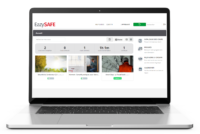
TAILORED INDUCTION
Create site-specific inductions that can be customised and offered in several languages.
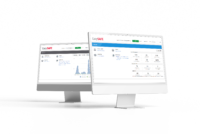
AUTOMATED COMPLIANCE
Ensure contractors complete training before arrival with automated reminders and digital certificates.
CENTRALISED MANAGEMENT
Simplify oversight with dashboards and real-time records, making audits straightforward.