
Digital Twins for Safety: Visualising Risk Before the incident
Risk changes faster than documents
An industrial site is never static. Deliveries change traffic patterns, temporary storage narrows pedestrian routes, maintenance opens restricted areas and new equipment alters sight lines. Written controls may still look complete while operations have already moved on.
Digital twins are beginning to address this gap. A living digital representation can bring layouts, assets, movement and selected operational data into one shared view. Instead of waiting for an incident or near miss to reveal a dangerous interaction, teams can visualise it earlier and ask: what could happen here next?
For EHS leaders, the opportunity is practical. Digital twins can make inductions site-specific, reveal spatial patterns in hazard reports and help teams explore controls before the floor changes. Their value grows when connected to training, contractor onboarding and safety action.
What makes a digital twin more than a 3D model?
A digital twin is more than a three-dimensional walkthrough. NIST describes digital twins as virtual representations that can be synchronised with real-world entities and processes at a chosen frequency and level of detail. They can use current and historical data to represent the present and explore possible futures.
For an Irish site, a safety-focused twin might combine a current layout with asset status, traffic data, sensors, access controls, work permits, near-miss locations and temporary work zones. Not every use case needs live data: shutdown planning may use scheduled updates, while vehicle interactions may need frequent information.
Trust depends on currency, ownership and validation. Teams should define update triggers, data owners and how the model is checked against worker feedback and the real site. An unmaintained twin becomes another static document – only a more convincing one.
Three ways digital twins change frontline safety
Site induction becomes a rehearsal
A twin can let a worker rehearse the site from the inside. Before arrival, a contractor could follow the route from gate to permit office, identify vehicle interfaces, locate emergency equipment and see restricted zones. The twin provides spatial context; a digital induction platform delivers the right message by role, language, site and work activity.
Hazard identification becomes spatial and dynamic
Hazard registers organise risk by activity or equipment, but incidents happen in space. Mapping observations onto a twin can expose repeated near misses around one crossing, heat exposure beside a process line or congestion at shift change. Workers still identify what the model misses, while the twin gives their reports a shared context.
Controls can be tested before the floor is changed
Digital twins allow teams to ask what if. What happens to pedestrian exposure if racking moves? Does a barrier create a new pinch point? Can emergency egress cope with a temporary production cell? Simulation can compare options before workers are exposed, but it remains decision support. Competent review, worker consultation and a field check are still essential.
Linking Spatial Intelligence with Verified Training
Implementing a Digital Twin vision requires a robust platform to manage, verify, and document workforce competency. EazySafe seamlessly connects advanced site visualisation with centralised compliance tracking:
- Integrated Pre-Site Onboarding:Embed interactive site layouts and visual hazard maps directly into digital onboarding modules, ensuring workers understand site geography before arrival.
- Zone-Specific Contractor Verification: Restric contractor acccess until they have successfully completed site-specific visual inductions matched to the exact zone or building where their permit applies.
- Audit-Proof Compliance Tracking: Automatically archive visual induction completions, spatial hazard test scores, and refresher records in a single, secure cloud dashboard for instant regulatory inspection.
2026 Action Plan for EHS Leaders
To integrate spatial risk visualisation into your organisation’s safety strategy, follow these five practical steps:
-
Identify High-Risk Zones for 3D Capture: Prioritise modelling complex, high-consequence operational areas (e.g., chemical storage, boiler rooms, high-traffic logistics bays).
-
Modernise Your Induction Modules: Replace static slides with interactive 3D layout maps and visual hazard checks delivered via EazySafe.
-
Simulate Emergency Evacuation Routes: Use spatial models to test and refine emergency escape routes, ensuring clear visual references for all site zones.
-
Standardise Contractor Zone Briefings: Require all third-party technicians to complete zone-specific digital site orientation prior to issuing work permits.
-
Track Visual Retention Metrics: Evaluate workforce hazard recognition scores post-induction to continually refine site visual assets and induction effectiveness.

Discover our Contractor Induction Platform
Streamline your contractor management with our customisable, compliant, and easy-to-use digital induction system.
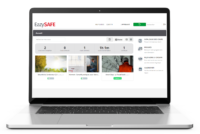
TAILORED INDUCTION
Create site-specific inductions that can be customised and offered in several languages.
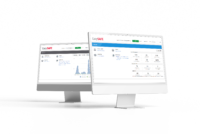
AUTOMATED COMPLIANCE
Ensure contractors complete training before arrival with automated reminders and digital certificates.
CENTRALISED MANAGEMENT
Simplify oversight with dashboards and real-time records, making audits straightforward.