
Manual Handling 2026: Using AI and Wearables to Prevent Strains
The Ergonomic Plateau
For decades, managing manual handling risk in Irish workplaces followed a predictable playbook: schedule a classroom session every three years, demonstrate bending at the knees to pick up a cardboard box, gather paper signatures, and file away the certificates.
Yet, year after year, Health and Safety Authority (HSA) data reveals a troubling reality: manual handling remains the leading cause of non-fatal workplace injuries in Ireland, consistently hovering around 32% to 33% of all reported incidents. From high-volume distribution centres in Dublin to manufacturing plants in Munster and healthcare facilities nationwide, musculoskeletal disorders (MSDs) continue to account for hundreds of thousands of lost working days annually.
Classroom theory alone has hit a wall. As we progress through 2026, forward-thinking operations are shifting from static, periodic training to dynamic, data-driven ergonomic management powered by Artificial Intelligence (AI) and wearable technology.
Why Traditional Approaches Fail to Stop Musculoskeletal Strains
Under Irish legislation, specifically Chapter 4 of Part 2 of the General Application Regulations, employers are legally required to avoid or manage manual handling risks using risk assessment frameworks such as TILE (Task, Individual, Load, Environment).
Despite widespread compliance with training requirements, musculoskeletal injuries persist for three core reasons:
- The “Classroom vs. Shop Floor” Gap: Employees often demonstrate perfect lifting mechanics during formal instruction, but revert to awkward bending, reaching, and twisting during fast-paced operational shifts.
- The Stealth Risk of Cumulative Fatigue: While acute lifting injuries are recorded immediately, micro-traumas small, repetitive strains built up over months of suboptimal posture remain completely invisible until they trigger a debilitating chronic injury.
- Static Risk Assessment Blind Spots: Paper-based risk assessments capture a single snapshot in time. They cannot account for real-time variables like end-of-shift exhaustion, fluctuating line speeds, or non-standard package dimensions.
How Modern Technology is Transforming Workplace Ergonomics
To break the cycle of repetitive strain injuries, organisations are pairing physical risk management with real-time digital intelligence.
🤖 AI Motion Analytics & Predictive Computer Vision
Computer vision models analyse operational video feeds in real time to automatically calculate ergonomic risk scores (such as REBA or RULA). By identifying high-risk postures across assembly lines and fulfillment zones, EHS managers can redesign workstations before a strain occurs.
⌚ Wearable Ergonomic Bio-Feedback
Compact, wearable sensors worn on a worker’s collar or upper back provide gentle haptic vibrations whenever dangerous twisting or bending thresholds are exceeded. This immediate bio-feedback builds subconscious posture awareness on the job, correcting movement patterns in real time.
📊 Heatmaps & Dynamic Micro-Learning
Anonymised aggregate data from wearables and camera analytics highlights exact facility zones or shifts where strain risk spikes. Instead of waiting three years for a blanket refresher, targeted micro-learning modules can be deployed immediately to specific teams showing high strain indicators.
Strategic Focus: Moving from Passive Compliance to Active Prevention
Relying on a binder of three-year-old manual handling certificates does not shield a workforce from repetitive strain injuries. True risk reduction happens when real-time movement data informs physical workstation design and targeted, continuous education. In 2026, technology allows us to eliminate ergonomic blind spots before they turn into lost-time injuries.
Modernising Training & Compliance
Deploying modern ergonomic tools requires an agile, reliable compliance platform to convert operational insights into structured learning. EazySafe bridges the gap between technology and workforce execution:
- Dynamic Refresher Delivery: Deliver short, bite-sized manual handling refreshers directly to workers when dynamic data signals an increase in risk factors or procedural updates.
- Standardised Onboarding: Ensure every employee, temporary worker, and contractor completes verified, high-quality digital manual handling inductions before stepping foot on the operational floor.
- Centralised, Audit-Ready Records: Automatically maintain a single source of truth for all training completions, practical evaluations, and compliance updates, eliminating administrative paperwork during regulatory reviews.
2026 Ergonomic Action Plan for EHS Leaders
To reduce musculoskeletal strains and modernise your site’s ergonomic culture, follow these five actionable steps:
- Analyse Your Incident Patterns: Audit your site’s historical injury and near-miss logs to pinpoint the exact tasks, lines, or shifts generating back and joint strains.
- Implement Continuous Micro-Learning: Transition away from relying solely on static three-year training cycles by integrating regular, targeted digital refresher modules via eazySafe.
- Pilot Wearable Bio-Feedback: Test ergonomic wearables or AI vision analytics in high-repetition environments to gain objective data on worker posture and fatigue zones.
- Redesign High-Risk Workstations: Utilise posture heatmaps to justify mechanical lifting aids, adjustable height tables, or re-engineered workflow layouts to eliminate manual handling where feasible.
- Unify Contractor Onboarding: Ensure third-party and seasonal workers undergo the exact same rigorous digital manual handling orientation as full-time staff.
Eliminating the 32%
Musculoskeletal injuries are not an inevitable tax on productivity. By combining wearable tech and AI motion analysis with centralised, continuous training workflows, organisations can finally address the root causes of workplace strains.
[/vc_row]

Discover our Contractor Induction Platform
Streamline your contractor management with our customisable, compliant, and easy-to-use digital induction system.
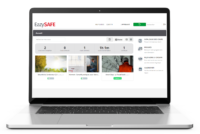
TAILORED INDUCTION
Create site-specific inductions that can be customised and offered in several languages.
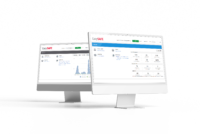
AUTOMATED COMPLIANCE
Ensure contractors complete training before arrival with automated reminders and digital certificates.
CENTRALISED MANAGEMENT
Simplify oversight with dashboards and real-time records, making audits straightforward.