
Integrating EHS into Enterprise Risk Management
From Safety Data to Business Intelligence
Safety Risk Is Enterprise Risk
In many organisations, EHS and enterprise risk management still operate on different clocks. Site teams review hazards, incidents, training and corrective actions. Corporate risk teams discuss strategic, financial, operational and reputational exposure. Both groups may be looking at the same underlying threat, but the information reaches leadership through separate systems, terminology and reporting cycles.
That separation is increasingly difficult to defend. Irish manufacturers, logistics operators and industrial businesses depend on reliable operations, skilled people, contractor performance and customer trust. A recurring vehicle near miss, overdue engineering control or pattern of fatigue reports is therefore more than a local safety issue. It may signal disruption, labour loss, insurance exposure, regulatory attention or damage to the organisation’s licence to operate.
ISO 31000 frames risk management as something embedded in governance, strategy, planning, reporting, values and culture. The Health and Safety Authority similarly emphasises that directors are responsible for ensuring safety and health is integrated into operations. In 2026, the leadership question is no longer whether EHS belongs in ERM. It is whether the business has sufficiently reliable data to make that integration useful.
Why EHS Data Belongs in the Enterprise Risk View
A risk register may label safety as one corporate risk, but operational EHS data reveals how that risk is changing. When translated into business consequences, it strengthens decisions in three areas:
- Operational resilience. Equipment hazards, contractor failures, fatigue and overdue corrective actions can interrupt production, warehousing or transport. Leading EHS signals help leaders act before disruption becomes material.
- People and retention. Employees judge an organisation by whether concerns are heard and controls are completed. Repeated unresolved hazards can undermine trust, increase pressure on experienced teams and weaken the employer proposition.
- Reputation and commercial confidence. Customers, tendering partners, insurers and regulators look for evidence of controlled operations. A credible safety system supports confidence; a gap between policy and practice can quickly become a brand issue.
This does not mean every near miss belongs on the corporate risk register. It means EHS teams should identify patterns, control weaknesses and exposure trends that could affect enterprise objectives, then escalate them using the same language and thresholds applied to other business risks.
Three Critical Integration Priorities for 2026 Leaders
Successful integration is less about adding another dashboard and more about improving how information is defined, interpreted and governed. Three priorities matter most.
Create a common risk language
Site severity ratings do not always align with enterprise impact scales. EHS, operations, HR, finance and risk teams should agree how a safety exposure maps to business continuity, people, legal, financial and reputational consequences. Each material risk needs a named owner, defined control owners and an escalation threshold that is understood across functions.
Balance leading and lagging indicators
Injury rates and lost-time events describe outcomes after harm has occurred. ERM also needs forward-looking evidence: repeat hazards, near-miss quality, risk-assessment reviews, training coverage, contractor induction, corrective-action ageing and audit findings. Numbers require context. A rise in near-miss reports may indicate increased exposure, but it may also show stronger reporting confidence. Leadership should examine severity, recurrence and response, not reward silence.
Build EHS into the governance cadence
Integration fails when a quarterly board summary is disconnected from daily control. Material EHS trends should feed the existing ERM review cycle, while agreed triggers create faster escalation between meetings. Decisions then return to the site through funded actions, accountable owners and deadlines. That closed loop is what turns reporting into risk management.
The EazySafe Advantage: Building a Trusted EHS Evidence Layer
EazySafe is not a replacement for an enterprise risk platform or the judgement of risk owners. We help clients improve the operational evidence feeding those systems. By digitising frontline EHS activity, organisations can move from fragmented spreadsheets and paper records to more consistent, traceable information across sites and workforce groups.
- Connected safety-management data. ENSURE supports risk assessments, hazard and near-miss reporting, incident management, audits, compliance tracking and corrective actions in one digital environment.
- Visible control performance. Track action ownership, deadlines and closure so leaders can see where recurring findings or overdue controls may create wider business exposure.
- Workforce and contractor readiness. Use tailored, multilingual training and site inductions to provide role-relevant instruction, supported by completion records, reports and a central training matrix.
- Consistent reporting across operations. Standardised workflows and dashboards help EHS leaders compare trends and prepare concise evidence for operational reviews, ERM discussions and assurance activity.
2026 EHS-to-ERM Action Plan for Enterprise Leaders
Begin with the decisions leadership needs to make, then work backwards to the EHS evidence required. Five actions can establish the connection.
- Align the taxonomy. Map EHS risk categories and severity ratings to the organisation’s enterprise impact scales, objectives and risk appetite.
- Trace the consequences. For priority exposures, document the potential effects on people, continuity, cost, customers, reputation and regulatory obligations.
- Select a balanced indicator set. Combine outcomes with leading measures such as repeat hazards, critical-control checks, corrective-action ageing and competency coverage.
- Set governance and escalation triggers. Define who reviews the data, how often, what reaches executive or board level and which thresholds require immediate action.
- Digitise and test the source evidence. Use EazySafe to standardise reporting, training and follow-up, then verify data quality with site teams before relying on trends in ERM decisions.
Conclusion: Stop Managing the Same Risk Twice
EHS and ERM are not competing disciplines. One provides detailed knowledge of how exposure develops at the frontline; the other connects that exposure to strategy, resilience and enterprise value. When they remain separate, leaders receive delayed or incomplete signals and site teams may struggle to secure attention for material controls.
Connecting them starts with trustworthy operational data, a shared risk language and a governance loop that funds and verifies action. With digital safety management, tailored workforce learning and central visibility, eazySafe can help organisations make EHS performance a stronger part of enterprise decision-making – protecting people while supporting continuity, reputation and retention.

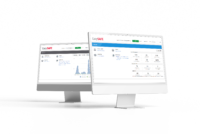
Discover our Contractor Induction Platform
Streamline your contractor management with our customisable, compliant, and easy-to-use digital induction system.

TAILORED INDUCTION
Create site-specific inductions that can be customised and offered in several languages.
AUTOMATED COMPLIANCE
Ensure contractors complete training before arrival with automated reminders and digital certificates.
CENTRALISED MANAGEMENT
Simplify oversight with dashboards and real-time records, making audits straightforward.