
Auditor Pillar: The Convergence of Digital Cyber Threats and Physical Harm
For decades, EHS management and IT cybersecurity operated in completely separate silos. IT protected databases, firewalls, and company email accounts; EHS managed machine guards, personal protective equipment, chemical safety, and floor-level physical hazards.
That boundary has officially dissolved. As Irish facilities across pharmaceutical manufacturing, automated logistics, and heavy industry become hyper-connected, operational technology (OT) and digital safety systems are fully integrated with enterprise networks.
With the ongoing transposition of the EU’s NIS2 Directive into Irish law via the National Cyber Security Bill, regulatory bodies and health and safety authorities are enforcing an “all-hazards” approach to risk. An unpatched server or compromised credential isn’t just a data breach risk—it can override emergency shutdown systems, disable toxic gas ventilation, alter automated guided vehicle (AGV) parameters, or lock workers out of life-safety alerts.
Why OT Cybersecurity is the Ultimate Safety Challenge
Securing digital safety systems is notoriously difficult because operational technology operates under very different constraints than standard corporate IT. In high-consequence Irish operational environments, EHS leaders face three primary vulnerabilities:
- Legacy OT Vulnerabilities: Many critical safety instrumented systems (SIS) and programmable logic controllers (PLCs) were installed years ago without modern encryption or authentication. Upgrading them without causing costly operational downtime is a constant struggle.
- The Supply Chain & Contractor Gap: Third-party maintenance teams, field engineers, and contractors frequently connect external laptops or IoT diagnostic devices directly to shop-floor safety networks, introducing malware or unauthorized access points into secure zones.
- The Silo Trap: Safety managers often assume IT has secured all digital hardware, while IT teams assume EHS controls the physical hardware. This blind spot leaves digital emergency stop-work systems and hazard detection platforms unprotected.
How 2026 Auditors Evaluate Digital Safety Risk
Modern EHS and compliance auditors no longer look at machinery in isolation. In 2026, evaluating physical safety requires scrutinising the digital integrity of the systems protecting your workforce.
💻 Operational Technology (OT) Risk Integration
Auditors check whether your statutory Risk Assessments reflect digital failure points. If a cyber incident causes a PLC or sensor to fail, does the system default to a hardware-isolated “fail-safe” state, or does it leave physical hazards active without alerting the operator?
🛡️ Cyber Hygiene & Access Controls
Auditors review role-based access control (RBAC) and multi-factor authentication (MFA) across all safety dashboards and plant management tools. Over-privileged worker accounts or shared supervisor login credentials are flagged as immediate safety non-conformances.
🔗 Supply Chain & Contractor Digital Verification
Under updated compliance frameworks, auditors inspect how external contractors access site machinery. Allowing vendor access to OT equipment without verified cybersecurity induction training and system logging is a direct audit violation.
The Auditor’s Strategic View: Physical Safety Demands Digital Integrity
When evaluating an enterprise today, you look closely at the boundary between IT networks and physical machinery. If an organisation claims to have zero-harm standards on the shop floor, but permits unverified contractor laptops to plug into safety-critical networks or lets expired access credentials remain active, the physical risk is dangerously high. In 2026, you cannot guarantee worker safety without securing the software and data feeds that keep them alive.
The EazySafe Edge: Unifying Digital Security and Compliance
Maintaining audit readiness across digital safety procedures requires transparent, centralised, and secure data management. eazySafe bridges the gap between software reliability and worker safety:
- Secure Role-Based Access Control: Standardise and limit access to safety-critical documentation and training records, ensuring only authorised personnel can grant site entry or adjust competency records.
- Verifiable Contractor Onboarding: Eliminate contractor vulnerabilities by delivering standardised, secure digital inductions prior to site arrival—verifying identities and enforcing cyber-hygiene rules before anyone steps onto the shop floor.
- Audit-Proof Cloud Archiving: Consolidate training records and competency data onto a secure, encrypted cloud platform, eliminating the risk of lost paper trails or local server failures during regulatory inspections.
🛠️ 2026 EHS Cybersecurity Action Plan: Steps for Safety Leaders
To ensure your physical safety systems are resilient against digital threats, carry out these five practical steps:
- Audit Your Digital Risk Assessment: Review your site safety statement to ensure cyber-tampering, network outage, and OT sensor failures are explicitly addressed as physical safety hazards.
- Enforce Hard-Wired Fail-Safes: Verify with engineering that all critical physical interlocks, emergency stops, and gas shut-offs rely on physical/mechanical fail-safes rather than purely software-driven triggers.
- Tighten Contractor Access: Require all third-party technicians to complete a digital safety and cyber-hygiene induction via eazySafe before granting network or physical access to machine systems.
- Establish IT-EHS Communication Protocols: Create a combined incident response plan between IT/Cybersecurity and EHS teams so that a network anomaly immediately triggers a physical safety check on shop-floor equipment.
- Regularly Review User Permissions: Audit user access logs across all safety management software and digital dashboards, revoking credentials for departed or reassigned personnel immediately.
Digital Security Is Physical Protection
In the modern industrial landscape, cybersecurity is no longer just about preventing data leaks. it is about keeping your workforce safe from physical harm.
By treating digital vulnerabilities with the same rigour as mechanical hazards, you protect your people and your organisation. Let EazySafe streamline your safety inductions and record management so you can focus on building a safe, resilient, and fully secure operation.
About the Auditor Series
This is the latest instalment of our “Auditor Pillar” for 2026. Stay tuned for our upcoming strategic briefs on managing high-consequence risks in the modern digital enterprise.

Discover our Contractor Induction Platform
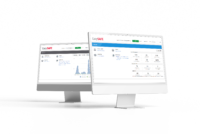
Streamline your contractor management with our customisable, compliant, and easy-to-use digital induction system.

TAILORED INDUCTION
Create site-specific inductions that can be customised and offered in several languages.
AUTOMATED COMPLIANCE
Ensure contractors complete training before arrival with automated reminders and digital certificates.
CENTRALISED MANAGEMENT
Simplify oversight with dashboards and real-time records, making audits straightforward.