SunSmart at Work: Protecting Outdoor Teams from UV Risks
The Changing Climate of Outdoor Safety
As we navigate the high UV-index months of summer 2026, Irish workplaces are facing an operational reality that can no longer be ignored. For decades, many operators in Ireland viewed solar radiation as a minor, secondary hazard primarily managed by providing standard hardhat brims or optional sunscreen.
Today, higher summer temperatures and sustained high UV index periods have elevated ultraviolet (UV) radiation into a front-line occupational hazard and protecting outdoor teams from UV risks is now a critical EHS duty. Failing to manage this exposure leaves a significant gap in an organisation’s modern duty of care, specifically in highly exposed sectors like construction, agriculture, logistics, utilities, and external facilities management.
The Invisible Occupational Hazard: Solar UV Radiation
Unlike localised hazards, UV radiation is an invisible risk that affects workers gradually. In Ireland, skin cancer remains the most common form of cancer, with over 11,000 new cases diagnosed every single year. Outdoor workers are at the highest risk, receiving up to three times the annual UV exposure of indoor employees.
The core challenge for any site team is combating the “Irish Weather Myth.” Many workers mistakenly believe that if the sky is overcast or if the breeze coming off the Irish Sea feels cool, the risk disappears. In reality, up to 80% of solar UV radiation can penetrate light cloud cover. By the time a worker notices a sunburn, cellular damage has already occurred, leading to short-term heat stress, cognitive decline on-site, and long-term health liabilities.
The 2026 Protocols: Moving Beyond Basic Sunscreen
Operationalising the national SunSmart guidelines means treating solar radiation exactly like any other workplace hazard. Under the Safety, Health and Welfare at Work Act 2005, employers are required to include UV exposure in their formal risk assessments.
In 2026, we apply a strict hierarchy of controls to environmental UV exposure:
Engineering and Scheduling Controls
Shadow Management
Utilising portable shading structures, canopy tents, or natural shelter for stationary tasks like ground assembly, breaks, or outdoor maintenance.
The 11-to-3 Window
Where feasible, restructuring high-exposure tasks to avoid peak UV hours (11:00 AM to 3:00 PM), scheduling heavy manual labour or highly exposed tasks for earlier or later in the shift pattern.
Administrative and Technical Integration
Live UV Index Monitoring:
Integrating local UV index parameters directly into daily morning briefings or weather app checks. When the local UV index hits 3 or higher, protective action is automatically mandated across the site.
Smart Wearables:
Implementing modern sensor badges or wearables that alert supervisors when a team’s cumulative UV dose or core temperature rises near safety thresholds.
🔎 The Strategic View: Shifting from Reactive to Predictive Controls
When we evaluate a site’s summer operations today, solar radiation must be treated as a dynamic variable. True due diligence means proving that you didn’t just hand out a bottle of sunscreen at the start of the season and walk away.
Management teams must show that they actively modified shift structures, monitored the UV index, provided specialized UV-protective apparel, and ran verified safety briefings. If you aren’t tracking environmental risk levels proactively during these high-exposure months, you aren’t truly managing your team’s health liability.
Practical Onboarding: The SunSmart 5 S’s
To ensure the lessons from last month don’t fade away, integrate these five practical steps into your ongoing site management:
Ensuring compliance across a moving network of subcontractors and staff requires embedding the Healthy Ireland SunSmart 5 S’s framework directly into day-one inductions:
- Slip on clothing that covers the skin, such as loose, long-sleeved, collared shirts.
- Slop on sunscreen (minimum SPF 30+ for adults) 20 minutes before going outside, reapplying every two hours.
- Slap on a wide-brimmed hat or a hard hat fitted with a neck flap.
- Seek shade during peak hours, particularly between 11:00 AM and 3:00 PM.
- Slide on wraparound sunglasses to protect against long-term eye damage and glare.
At EazySafe, we help site teams automate this process by building seasonal SunSmart modules directly into digital inductions. This ensures every worker receives a uniform, verifiable safety foundation before their first shift.
🛠️ Summer 2026 Action Plan: Protecting Your Teams
To ensure your outdoor operations are fully optimised for higher summer temperatures, apply this 5-step checklist across your jobsites:
- Update the Site Risk Register: Ensure “Solar UV Radiation” is formally classified as an occupational hazard with documented control measures.
- Automate UV Alerts: Train supervisors to check the UV index daily and trigger site-wide alerts when it reaches 3 or above.
- Audit Outdoor Gear: Verify that the provided workwear offers explicit UV protection and that hard hats are paired with appropriate neck covers.
- Provide Accessible Hydration & Shelter: Establish dedicated, shaded rest areas on-site and ensure clean water stations are frequently utilised to prevent heat stress.
- Digitise Safety Training: Use centralised digital platforms to push out quick, 2-minute SunSmart briefings so protection becomes an everyday habit for your workforce.
Conclusion: Sustainable Safety Under the Sun
Managing UV risks isn’t a minor seasonal compliance detail; it is a fundamental part of building a sustainable, resilient workforce. Leaving sun protection down to individual memory introduces variance and liability to your operation.
By utilising clear, digital workflows to standardise and track safety training, you eliminate the guesswork from seasonal risk management. Let modern systems handle the administrative verification, enabling your teams to focus on maintaining a safe, cool, and highly protected workplace all summer long.

Discover our Contractor Induction Platform
Streamline your contractor management with our customisable, compliant, and easy-to-use digital induction system.
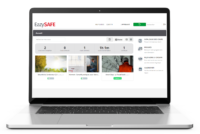
TAILORED INDUCTION
Create site-specific inductions that can be customised and offered in several languages.
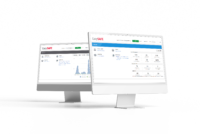
AUTOMATED COMPLIANCE
Ensure contractors complete training before arrival with automated reminders and digital certificates.
CENTRALISED MANAGEMENT
Simplify oversight with dashboards and real-time records, making audits straightforward.