
Remote vs. Hybrid Auditing: Finding the Balance in 2026
The Post-Adaptation Era
As we navigate 2026, the debate over remote auditing has fundamentally shifted. We are no longer in the “emergency adaptation” phase of the early 2020s. Today, remote and hybrid auditing are established, standardised methodologies recognised in the ISO 19011:2026 update and by the Health and Safety Authority (HSA).
However, with this maturity comes a new challenge: The Quality Balance. For an EHS Manager or a Lead Auditor, the convenience of a remote desktop review must be weighed against the irreplaceable value of physical “boots on the ground.” In the high-stakes Irish industrial landscape—from the sprawling pharmaceutical campuses in Cork to the high-velocity logistics hubs in Dublin, the choice between remote and hybrid auditing is now a strategic risk decision.
-
The Strategic Landscape: Remote vs. Hybrid in 2026
In 2026, we categorise auditing into two distinct digital-first flows. Understanding the difference is the first step toward finding your balance.
1.1 Remote Auditing (The 100% Digital Flow)
This is reserved for low-to-medium risk environments or specific administrative audits. It relies entirely on Information and Communication Technology (ICT). In 2026, this isn’t just a Zoom call; it’s an integrated data stream involving live IoT sensor feeds, satellite imagery for site perimeters, and fully digitised document management systems.
1.2 Hybrid Auditing (The Strategic Middle Ground)
This is the “Gold Standard” for 2026. A hybrid audit utilises a Remote Document Review (Phase 1) followed by a Targeted Physical Verification (Phase 2). By performing the “paperwork” off-site, the auditor can spend 100% of their on-site time on the factory floor, observing behaviours, testing machinery guards, and interviewing staff—the areas where remote auditing traditionally fails.
-
The Quality Challenge: What is Lost in the Screen?
Despite the advancement of Agentic AI and high-definition drone feeds, certain elements of a safety audit remain stubbornly human. As auditors, we call this the “Sixth Sense.”
- The “Vibe” of Safety Culture: You can’t smell a chemical leak through a screen. You can’t feel the “tension” in a morning toolbox talk via a headset.
- The “Shadow” Hazards: A remote camera shows you what the site contact wants you to see. A physical auditor looks behind the pallet, under the racking, and in the “forgotten” corners of the facility.
- Unscripted Interviews: On a video call, workers often feel “on stage.” On the floor, a casual conversation while walking the line often reveals more about the true safety culture than any formal interview.
🔎 The Auditor’s Strategic View: Defining “Digital Trust”
The first question when planning an audit is: What is this site’s Digital Maturity?
If a company is still using paper-based records or fragmented Excel sheets, a remote audit is impossible to perform with high confidence. Digital Trust is the foundation of the modern audit. I look for ‘Single Source of Truth’ platforms where I can verify that training records haven’t been backdated and that risk assessments are living documents. Without verifiable digital evidence, a remote audit is just a leap of faith and in safety, we don’t take leaps of faith.*
-
Regulatory Alignment: ISO 19011:2026 and ICT
The latest 2026 revisions to auditing standards have placed strict guardrails on how we use technology. Key regulatory focuses now include:
- Data Security & Confidentiality: Auditors must now prove that the ICT used for remote auditing meets high-level encryption standards to protect sensitive Irish industrial data.
- Competence in ICT: An auditor is no longer competent if they cannot navigate a Cloud-based EHS system or interpret live telemetry data.
- The “High-Risk” Exception: For COMAH (Control of Major Accident Hazards) sites or high-risk chemical processing, 100% remote auditing is now discouraged by the HSA, mandating a hybrid approach as the minimum quality standard.
-
Technology & The eazySafe Edge: Enabling Remote Certainty
The primary reason remote audits fail is a lack of Verifiable Digital Evidence. This is where EazySafe changes the game for the 2026 auditor.
- Centralised Training: When an auditor asks for training records, eazySafe provides a timestamped, tamper-proof digital trail. There is no “searching for files.”
- Interactive Induction Maps: Using eazySafe’s site-specific digital inductions, an auditor can remotely verify that contractors have been briefed on the exact hazards of a zone before they even arrived on-site.
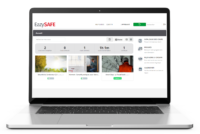
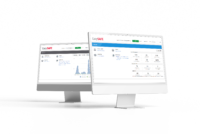
- Real-Time Compliance Dashboards: eazySafe allows the auditor to perform “Continuous Monitoring” rather than a once-a-year snapshot. In 2026, I can “audit” your training compliance in 30 seconds from my office in Galway, allowing my on-site time to be spent on high-value hazard identification.

EazySafe Dashboard 5. 2026 Action Plan: Finding Your Quality Balance
If you are preparing for your next audit cycle, use this checklist to decide your methodology:
- Assess Digital Maturity: Are 100% of your safety records (Inductions, RAMS, SOPs) digital and centralised? If no, stay with a Physical Audit.
- Evaluate Risk Profile: Is the site high-risk (Pharma, Construction, Chemicals)? If yes, choose a Hybrid Audit (Remote Docs + On-site Floor Walk).
- Verify ICT Stability: Do you have 5G/High-speed Wi-Fi across the entire floor for live video streaming?
- Define the “On-Site Mission”: If you go Hybrid, what exactly can only be seen in person? (e.g., machine guarding tests, smell/noise checks, employee sentiment).
- Prepare the Digital Audit Room: Ensure your EazySafe folders are organised and accessible to the auditor 48 hours before the Phase 1 review begins.
Conclusion: The Auditor of the Future
In 2026, the “best” audit isn’t the one that costs the least or takes the shortest time. It’s the one that provides the most accurate reflection of the site’s true safety state.
Remote auditing provides efficiency, but Hybrid auditing provides assurance. By leveraging technology like EazySafe to handle the data, we empower auditors to do what they do best: use their human expertise to ensure that every worker goes home safe at the end of the day.
The balance has been found. It’s time to implement it.

Discover our Safety Training Platform
Train your employees anytime, anywhere with our environmental, health, safety and wellness training platform.
TAILORED TRAINING
Discover our safety training courses and ehs onboardings, which can be customised and offered in several languages.
SAFETY MANAGEMENT
Ensure the distribution of your safety policy by training your permanent, temporary or seasonal staff.
GLOBAL MONITORING
Simplify the management of your safety policy thanks to the numerous dashboards and training reports.