
Psychosocial Risk Assessment:
The HSA’s New Non-Negotiable Inspection Area
In 2026, safety is no longer just about what we can see; it’s about how your employees feel. The HSA is now treating psychosocial risks with the same legal weight as a faulty forklift.
For decades, the core of workplace safety in Ireland was physical. We audited ladders, machinery guards, and fire exits. But as we progress through 2026, the landscape of “harm” has been redefined. The Health and Safety Authority (HSA) has officially elevated Psychosocial Risk Assessment to a non-negotiable inspection area.
An unannounced inspector is now as likely to ask for your Work-Related Stress (WRS) risk assessment as they are for your manual handling certs. If your Safety Statement does not address the psychological health of your workforce, you are effectively operating with a major non-conformance.
Defining the “Invisible” Hazard
What exactly are psychosocial hazards? In the eyes of a 2026 auditor, these are elements of work design, management, and social context that can cause psychological or physical harm.
The HSA focuses on several key pillars:
 Workload and Pace: Is the volume of work consistently exceeding the employee’s capacity?
- Control and Autonomy: Does the worker have a say in how their tasks are performed?
- Support: Is there a functional system for reporting issues without fear of retribution?
- Relationships and Bullying: Are there clear, enforced protocols against workplace aggression?
- Third-Party Violence: Especially critical for retail, hospitality, and healthcare sectors.
Why is it “Non-Negotiable” in 2026?
The shift from “nice-to-have” to “mandatory” stems from a 2025 spike in long-term absenteeism related to burnout and work-related stress in Ireland. Insurance premiums have also pivoted, with many providers requiring proof of a psychosocial risk assessment before renewing Professional Indemnity or Employers’ Liability policies.
The HSA’s 2026 mandate includes:
- Targeted Audits: Inspectors are trained to look for “Red Flags” in high-pressure sectors like Pharma, Tech, and Logistics.
- Evidence of Consultation: You cannot perform a psychosocial assessment in a vacuum. You must prove you have consulted with the employees.
- Link to the Safety Statement: It is no longer enough to have a standalone “Wellness Policy.” These risks must be integrated into the core Safety Statement under the 2005 Act.
The Auditor’s Challenge: Documenting the Subjective
One of the biggest hurdles for EHS managers is documenting a risk that isn’t as obvious as a spill on the floor. In 2026, the “Paper Trail” for mental health must be robust.
💡 Expert Perspective: Beyond the Annual Survey
In 2026, an annual ‘engagement survey’ is not a risk assessment. Auditors are looking for Dynamic Risk Management. They want to see that when a department experiences a surge in turnover or a high rate of ‘near-miss’ incidents, the management team conducts a specific psychosocial deep dive to identify the root cause—whether that be a toxic management style or an unsustainable shift pattern.
Implementing ISO 45003: The Global Standard
To meet HSA expectations, many Irish firms are turning to ISO 45003—the first international standard on managing psychosocial risks at work.
While not mandatory, following its framework provides a “Safety Shield” during an inspection. It helps organisations move from reactive (providing an EAP after someone burns out) to proactive (changing the work design so they don’t burn out in the first place).
Key ISO 45003 Strategies for 2026:
- Work Design: Evaluating if job descriptions are clear or if “Role Ambiguity” is causing chronic stress.
- Environment: Assessing whether the physical workspace (noise, lighting, heat) contributes to mental fatigue.
- Communication: Auditing the “Right to Disconnect” protocols. Are employees being pressured to respond to messages at 9:00 PM?
The eazySafe Approach: Training a Culture of Awareness
How do you mitigate a risk that lives in the mind of the employee? Through verifiable education.
At EazySafe, we have seen a massive shift in how companies use our digital platforms to address psychosocial health.
- Managerial Training: Training supervisors to spot the “Early Warning Signs” of stress before it becomes a HSA-reportable incident.
- Employee Inductions: Ensuring every new hire understands the “Speak-Up” culture from day one. If an employee knows how to report a psychosocial hazard, the risk of that hazard escalating is reduced.
- Continuous Feedback Loops: Using digital tools to gather real-time data on workforce “temperature,” giving EHS managers the data they need to act.
🛠️ Your 2026 Psychosocial Action Plan
If an inspector walked in today, could you prove you are managing these risks? Here is your 3-step checklist:
Step 1: Conduct a Baseline Assessment
Use a validated tool (like the HSA’s WorkSafe or a custom ISO 45003 survey). Focus on the “big five”: Workload, Support, Relationships, Role, and Change.
Step 2: Update the Safety Statement
Ensure that “Psychosocial Hazards” are listed alongside “Fire” and “Electricity.” Each hazard must have a corresponding control measure (e.g., “Regular 1-to-1 meetings,” “Clear overtime limits,” “Conflict resolution training”).
Step 3: Train and Empower
Ensure that safety training isn’t just about physical tasks. Include modules on mental resilience, bullying prevention, and the Right to Disconnect.
Conclusion: The Holistic Future of Irish Safety
The 2026 HSA priorities are a mirror of our changing society. We work in faster, more connected, and more demanding environments than ever before. By treating psychosocial risks as a “non-negotiable” area of inspection, the authority is forcing a necessary evolution in Irish business culture.
Protecting your employees’ mental health is no longer just “the right thing to do”—it is a core requirement for a legal, profitable, and sustainable business. At EazySafe, we are committed

Discover our Safety Training Platform
Train your employees anytime, anywhere with our environmental, health, safety and wellness training platform.
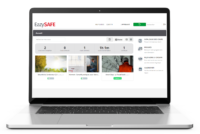
TAILORED TRAINING
Discover our safety training courses and ehs onboardings, which can be customised and offered in several languages.
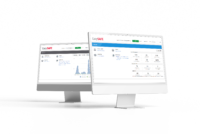
SAFETY MANAGEMENT
Ensure the distribution of your safety policy by training your permanent, temporary or seasonal staff.
GLOBAL MONITORING
Simplify the management of your safety policy thanks to the numerous dashboards and training reports.