
Why Your 2026 Safety Statement Needs a Hybrid-Work Revolution
For the past few years, many Irish organizations treated remote work as a “special case” a temporary addendum to their primary Safety Statement. However, as we move through 2026, the Health and Safety Authority (HSA) and insurance providers have shifted their expectations. The “temporary” grace period is over. Today, a robust Safety Statement must treat the home office with the same level of scrutiny, liability management, and ergonomic standards as the corporate headquarters.
We are no longer managing “remote workers”; we are managing a “Dual-Location Workforce.” This shift requires a fundamental revolution in how we assess, document, and mitigate risk
The Legal Landscape of 2026: The Duty of Care Extends Beyond the Office
Under the Safety, Health and Welfare at Work Act, the employer’s duty of care is not geography-dependent. In 2026, legal precedents in the EU have solidified that an injury occurring during “working hours” at a home station carries significant liability if the employer has not demonstrated “due diligence” in risk assessment.
The 2026 revolution starts by moving away from self-certified, one-page checklists. The HSA now looks for:
- Verifiable Assessments: Evidence that the employer has provided the tools or guidance to ensure the home workstation is compliant.
- Dynamic Policies: Safety Statements that account for “the fluid workday”—where a worker might spend the morning at a client site and the afternoon at home.
From Ergonomic “Tips” to Ergonomic “Standards”
In the early days of hybrid work, many employees worked from kitchen chairs or sofas. In 2026, the long-term impact of these poor setups is manifesting in a surge of musculoskeletal disorder (MSD) claims.
A permanent “Dual-Location” strategy must address:
- Equipment Provisioning: Ensuring the home setup (Chair, Monitor Height, Peripherals) matches the office’s ergonomic standards.
- The “Laptops are Not Workstations” Rule: In 2026, using a laptop without a riser and external keyboard for more than 2 hours is considered a failure in ergonomic risk management.
- Digital Ergonomics: Training employees to self-correct posturally using digital tools and frequent “movement breaks” integrated into their software.
The “Invisible” Risk: Psychosocial Hazards in 2026
The most significant addition to Safety Statements this year is the formalisation of Psychosocial Risk Assessments. When an employee is isolated, the manager’s traditional “open-door policy” is physically impossible.
Your 2026 Safety Statement must define protocols for:
- The Right to Disconnect: Clearly stating that work-related communication outside of hours is a health and safety risk (fatigue/burnout).
- Social Isolation Mitigation: How the company monitors the mental well-being of staff who may not see a colleague in person for weeks.
- Work-Life Blurring: Providing frameworks to help employees physically and mentally “leave the office” when the office is their spare bedroom.
Fire and Electrical Safety: The Domestic Variable
Traditional office safety relies on PAT testing and fire wardens. In a hybrid world, you cannot send a fire warden to 500 different homes. The revolution here is Education and Verification.
A 2026 Hybrid Safety Statement should include:
- Electrical Load Assessments: Guidance on avoiding “daisy-chaining” extension leads in older Irish homes.
- Smoke Alarm Verification: Requiring employees to confirm the presence of working smoke alarms in their designated workspace.
- Charging Protocols: Safe practices for charging company laptops and devices (avoiding charging on soft surfaces like beds or carpets).
The Role of Digital Inductions (The EazySafe Edge)
How do you train a workforce that is never in the same room at the same time? This is where the EazySafe digital revolution completes the circle.
In 2026, your Safety Statement is only as good as its implementation. Digital inductions allow for:
- Automated Re-Certification: Ensuring that, as home environments change (moving house, upgrading furniture), the risk assessment is updated.
- Interactive Learning: Moving beyond reading a PDF to interactive modules that show employees how to spot hazards in their own homes.
- Centralised Compliance: Giving EHS managers a “Single Source of Truth” to show an auditor that 100% of the hybrid workforce has been assessed and trained.
2026 Hybrid Safety Checklist for EHS Managers
To align your current Safety Statement with the 2026 reality, ensure you can tick these five boxes:
- Integrated Risk Assessment: Does your Safety Statement have a specific, detailed section for “Remote/Hybrid Work” that is not just an appendix?
- Provision of Hardware: Is there a clear policy on providing ergonomic chairs and monitors for home use?
- Mental Health Framework: Have you conducted a psychosocial risk assessment for your remote teams in the last 6 months?
- Training Audit Trail: Can you prove, with timestamps and records, that every hybrid worker has completed a home-office safety module?
- Incident Reporting: Is your “Near-Miss” and accident reporting system accessible and clearly understood for those working off-site?
Conclusion: Future-Proofing Your Most Valuable Asset
The “Hybrid-Work Revolution” is not a burden; it is an opportunity to build a more resilient, healthy, and loyal workforce. By moving from temporary checklists to permanent, professional “Dual-Location” risk assessments, Irish companies are doing more than just avoiding HSA fines—they are fostering a culture where safety is a constant, regardless of the postcode.
As we look toward the remainder of 2026, the companies that thrive will be those that realize the “Workplace” is no longer a building—it is an ecosystem.

Discover our Safety Training Platform
Train your employees anytime, anywhere with our environmental, health, safety and wellness training platform.
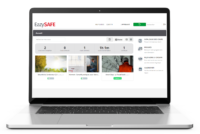
TAILORED TRAINING
Discover our safety training courses and ehs onboardings, which can be customised and offered in several languages.
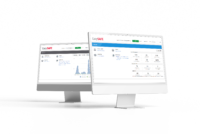
SAFETY MANAGEMENT
Ensure the distribution of your safety policy by training your permanent, temporary or seasonal staff.
GLOBAL MONITORING
Simplify the management of your safety policy thanks to the numerous dashboards and training reports.